Fire Extinguisher Staff Training –
Installing the correct fire extinguishers is only one part of effective workplace fire safety. For many businesses in Skipton, the bigger issue is whether staff actually know:
- where extinguishers are located
- which type should be used
- and when it is safe to tackle a fire
Even the best-maintained extinguishers can become ineffective if employees are unsure how to respond during an emergency.
Fire Extinguishers Are First Response Equipment
Fire extinguishers are intended to deal with small fires in their early stages before they escalate into larger incidents.
However, staff should understand that extinguishers are:
- not designed for large or rapidly spreading fires
- not a replacement for evacuation procedures
- and should only be used when there is a safe escape route available
Without training, panic and hesitation can delay response times or create unnecessary risks.
Staff Need to Recognise Different Extinguisher Types
One of the most common workplace issues is confusion between extinguisher types.
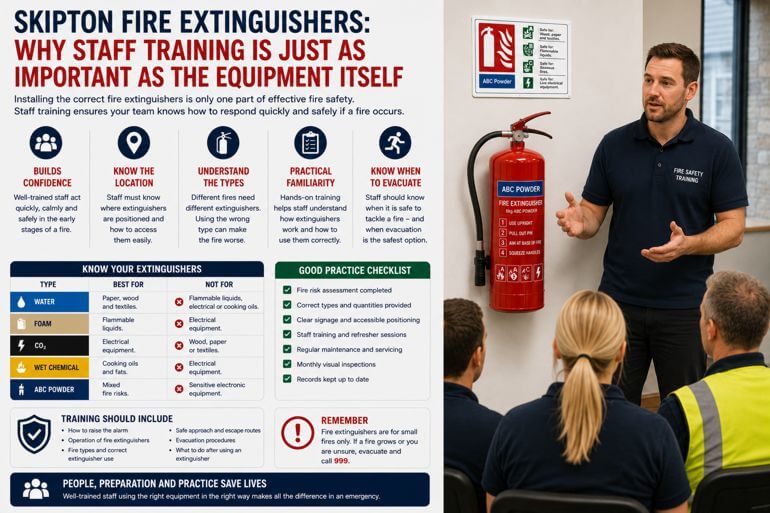
In many Skipton commercial premises, multiple extinguisher categories may be installed, including:
- water
- foam
- CO2
- wet chemical
- and ABC powder
Each is designed for different fire classes.
For example:
- CO2 extinguishers are generally used for electrical equipment
- wet chemical extinguishers are required near commercial cooking risks
- water extinguishers are suitable for combustible materials like paper and wood
Using the wrong extinguisher can worsen the situation rather than improve it.
Training Builds Faster Emergency Response
When staff know:
- where extinguishers are positioned
- which risks they cover
- and how they operate
they can respond far more quickly and confidently.
This is particularly important in:
- offices
- retail premises
- workshops
- warehouses
- hospitality venues
- and multi-floor buildings
Early intervention often prevents small incidents from becoming major emergencies.
Practical Familiarity Matters
Many employees have never physically handled a fire extinguisher before.
Basic practical training helps staff understand:
- how extinguishers are released from wall brackets
- how safety pins operate
- how discharge mechanisms work
- and the importance of aiming correctly
This removes uncertainty during real incidents.
Training Should Include Evacuation Awareness
Extinguisher training should never encourage unnecessary risk-taking.
Staff should understand:
- when to attempt first response
- when to retreat immediately
- and how evacuation procedures take priority
This balance is essential for safe workplace fire response.
Refresher Training Is Often Overlooked
Businesses frequently provide fire safety training once and then fail to revisit it.
However:
- staff change
- premises layouts evolve
- risks alter over time
- and people forget procedures
Regular refresher sessions help maintain awareness and confidence across the workforce.
Positioning and Signage Support Training
Training works best when extinguisher provision is consistent and logical.
In Skipton commercial premises, extinguishers should remain:
- clearly visible
- correctly signed
- unobstructed
- and easy to access
This helps staff locate equipment instinctively during an emergency.
Fire Risk Assessments Should Influence Training
Different businesses require different levels of awareness depending on their risks.
For example:
- offices may focus heavily on electrical equipment awareness
- kitchens require understanding of cooking oil fire risks
- industrial premises may involve mixed-risk environments
Training should reflect the actual hazards within the building rather than following a generic template.
Maintenance and Training Work Together
Even well-trained staff cannot rely on poorly maintained equipment.
Businesses should ensure:
- annual extinguisher servicing
- regular visual inspections
- compliant signage
- and accurate maintenance records
Training and maintenance must operate together as part of a wider fire safety strategy.
Confidence Helps Reduce Panic
During emergencies, uncertainty creates delay. Staff who understand basic fire response procedures are generally:
- calmer
- faster to react
- and more likely to follow correct procedures
This can significantly improve workplace safety outcomes.
Fire Safety Is About People as Well as Equipment
For businesses in Skipton, effective fire safety depends on more than installing extinguishers to satisfy compliance requirements. Proper staff training ensures that fire extinguishers become usable safety tools rather than simply wall-mounted equipment.
By combining:
- suitable extinguisher provision
- regular maintenance
- clear positioning
- and practical staff awareness
businesses can create a far more effective first-response fire safety strategy.
Frequently Asked Questions
Do staff legally need fire extinguisher training?
Businesses must provide appropriate fire safety instruction relevant to workplace risks and emergency procedures.
How often should fire extinguisher training be refreshed?
Refresher training should normally be carried out periodically, particularly when staff, layouts or risks change.
Should all staff use extinguishers during a fire?
No. Staff should only tackle small fires when trained and when a safe escape route remains available.