Fire Extinguisher Reliability –
Many businesses assume fire extinguishers will operate perfectly regardless of the environment they are installed in. However, for commercial premises in Skipton, temperature conditions can significantly affect extinguisher performance, lifespan and long-term reliability.
This is becoming increasingly important in environments such as:
- warehouses
- workshops
- outbuildings
- plant rooms
- loading bays
- and externally exposed commercial areas
where temperature fluctuations may become far more extreme than standard office conditions.
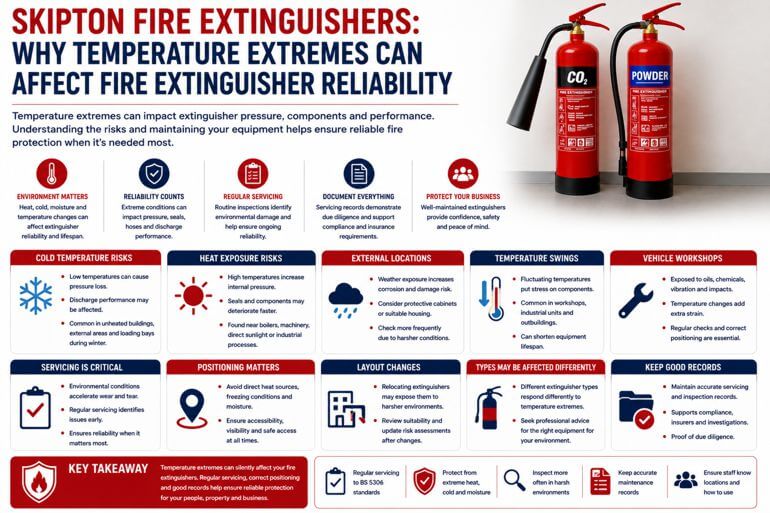
Fire Extinguishers Are Affected By Environmental Conditions
Commercial extinguishers are designed for reliable operation, but excessive:
- heat
- cold
- moisture
- and temperature variation
can gradually impact:
- pressure stability
- component condition
- hose flexibility
- and extinguisher integrity
over time.
Cold Temperatures Can Reduce Performance
In unheated environments, very low temperatures may affect:
- extinguisher pressure
- discharge performance
- and operational reliability
This can become particularly relevant in:
- external storage compounds
- detached units
- loading areas
- and seasonal facilities
during winter months.
Excessive Heat Can Also Create Problems
High temperatures may increase:
- internal pressure stress
- seal deterioration
- and accelerated equipment wear
Commercial environments exposed to:
- machinery heat
- direct sunlight
- boiler rooms
- or industrial processing
may require additional extinguisher planning considerations.
External Mounting Locations Need Careful Assessment
Some businesses position extinguishers:
- outdoors
- near roller shutters
- or in partially exposed locations
Without suitable protection, environmental exposure may increase:
- corrosion risk
- weather damage
- and servicing requirements
Workshops And Industrial Units Often Experience Wide Temperature Swings
Many industrial premises experience:
- cold overnight conditions
- warm daytime operation
- and changing seasonal temperatures
These fluctuations can place additional strain on:
- extinguisher components
- pressure systems
- and mounting equipment
over time.
Regular Servicing Becomes Even More Important
Environmental conditions may accelerate:
- wear
- corrosion
- pressure variation
- and component deterioration
Routine servicing helps identify:
- environmental damage
- reliability concerns
- and equipment degradation
before problems become serious.
Extinguisher Positioning Can Reduce Environmental Exposure
Professional extinguisher planning may help minimise unnecessary exposure to:
- direct heat sources
- freezing conditions
- moisture
- and operational hazards
while still maintaining:
- accessibility
- visibility
- and compliance
Vehicle Workshops Present Additional Challenges
Commercial garages and workshops may expose extinguishers to:
- oils
- chemicals
- vibration
- temperature changes
- and operational impacts
These environments often require:
- careful extinguisher positioning
- regular inspection
- and suitable maintenance schedules
Temperature Risks Are Often Overlooked During Layout Changes
As premises evolve, extinguishers may become relocated into:
- temporary storage areas
- external compounds
- or harsher operating environments
without reviewing:
- environmental suitability
- or long-term reliability considerations
Different Extinguisher Types May Behave Differently
Certain extinguisher types may respond differently depending on:
- storage conditions
- operating temperatures
- and environmental exposure
Professional fire safety advice helps businesses select suitable protection for specific operational environments.
Reliable Fire Protection Depends On More Than Installation Alone
For businesses in Skipton, maintaining extinguisher reliability requires ongoing consideration of:
- operating conditions
- environmental exposure
- servicing
- and long-term equipment protection
Professional fire extinguisher management helps provide:
- stronger reliability
- improved compliance
- safer emergency preparedness
- and better long-term fire protection performance
As commercial premises continue operating across increasingly varied environments, temperature considerations are becoming a more important part of modern extinguisher planning.
Frequently Asked Questions
Can cold weather affect fire extinguishers?
Yes. Extremely low temperatures may affect extinguisher pressure and discharge performance.
Do hot environments impact extinguishers?
High temperatures can increase wear, pressure stress and long-term equipment deterioration.
Should externally mounted extinguishers receive additional checks?
Yes. Outdoor exposure may increase corrosion and environmental damage risks.